




How a Solar Hot Water System Works
As the world moves toward renewable energy, solar hot water systems have become an excellent choice for efficiently heating water at home or work. These systems use sunlight to heat water, cutting down on fossil fuel usage and lowering energy bills. But how do they actually work? In this article, we’ll simplify the parts, types, and principles of a solar hot water system.
🔆 What is a Solar Hot Water System?
A solar hot water system, often called a solar water heating system, uses the sun’s thermal energy to heat water for homes or businesses. Unlike solar panels that generate electricity, these systems capture sunlight and turn it directly into heat. By using solar energy to heat water, households, hotels, and other buildings can reduce the consumption of electricity or gas which is often used to heat water.
🧩 Key Parts of a Solar Hot Water System
To understand a solar hot water system, you need to know about the main parts involved:
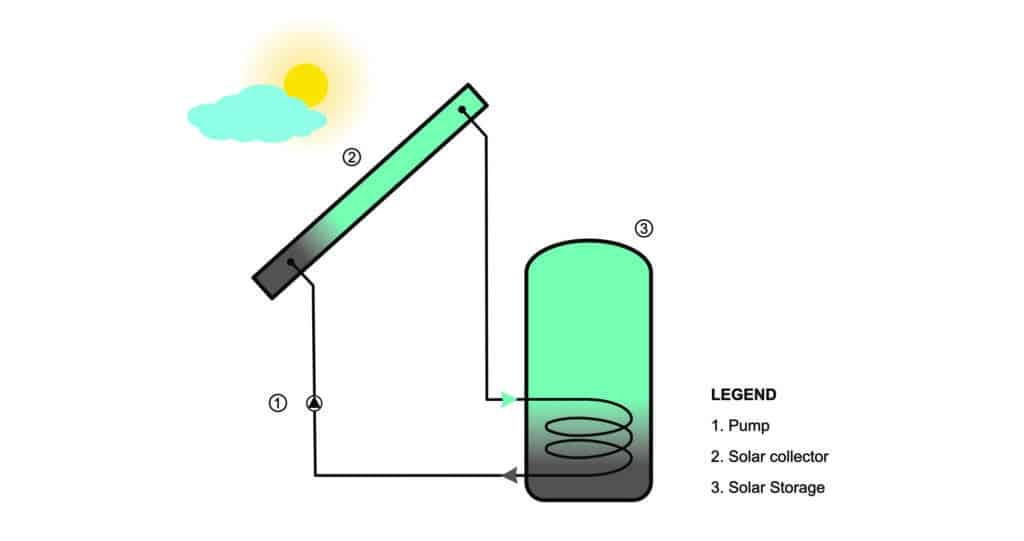
The basic components of a solar hot water system
- Solar Collectors
These are the most visible parts, typically placed on the roof. They catch solar rays and turn them into heat via a very efficient absorption process. Two main types exist: Flat-plate collectors and evacuated tube collectors, but there is a new kid on the block: the prismatic solar collector which has been designed specifically for sunny climates and flat-roofs. - Heat Transfer Fluid
This fluid, either water or an antifreeze like glycol, moves through the collectors, picking up heat. It’s crucial in closed-loop systems, where freezing temperatures matter. - Pump or Circulation System
In active systems, a pump moves the warmed fluid from the collectors to the storage tank. Passive systems use gravity and natural flow instead. - Heat Exchanger (optional)
This device transfers heat from the fluid to the household water without mixing them. Often used in climates where freezing of the liquid inside the collectors is a risk and ant-freeze is needed. - Hot Water Storage Tank
This insulated tank holds the heated water until you need it. - Controller (for active systems)
This regulates the flow based on temperature differences between the collector and storage tank.
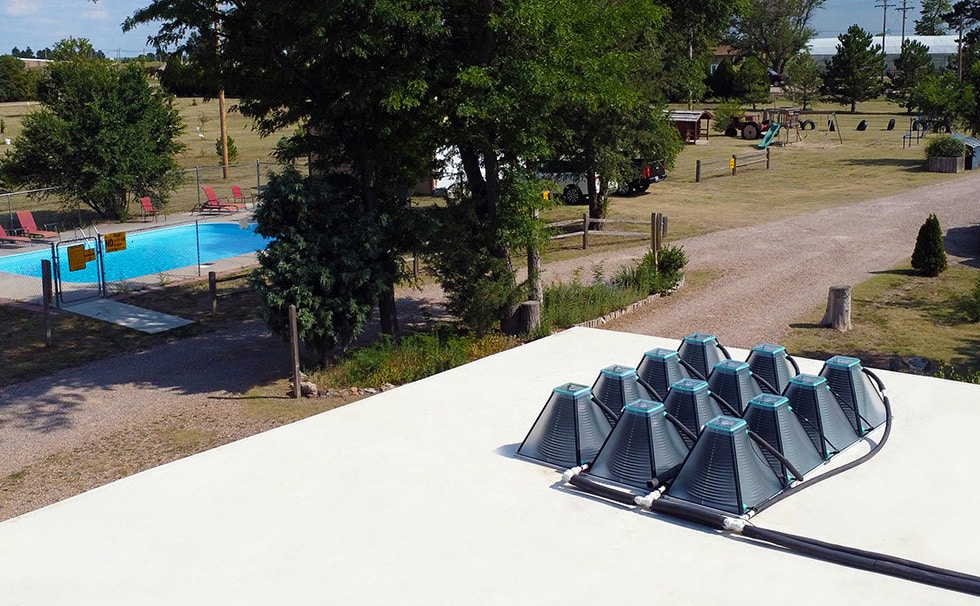
Prismatic shaped solar collectors by SolarisKit provide a new solar hot water solution ideal for flat-roofs in sunny climates like the UAE.
☀️ How a Solar Hot Water System Works (Step by Step)
Here’s a simple look at how it all comes together:
Step 1: Solar Energy Collection
Solar collectors absorb sunlight. The collector’s dark absorbing surface heats up quickly, transferring the heat to fluid flowing through tubes in or behind it.
Step 2: Heat Transfer
The heated fluid, pushed by a pump (in active systems) or moving naturally (in passive systems), goes to the heat exchanger if anti-freeze is present or if water, simply back to the tank.
Step 3: Water Heating and Storage
In the heat exchanger, thermal energy moves to the cold water stored in the insulated hot water tank. The fluid cools, returns to the collectors, and the cycle starts again.
Step 4: Usage
When you turn on the hot water tap, warm water comes from the tank, replaced by cold water that gets heated in the same solar way.
🧪 Types of Solar Hot Water Systems
Different systems work for different needs. Here are the basics:
- Active Solar Water Heating Systems
Use electric pumps, valves, and controllers to circulate water. They’re more efficient but slightly more complex and pricier. They come in two forms: Direct (Open-Loop) where water heats directly in the collector, and Indirect (Closed-Loop) where a heat-transfer fluid warms water via a heat exchanger. - Passive Solar Water Heating Systems
Rely on gravity and natural flow, without pumps or controllers. They’re simpler, cheaper, and more reliable but less efficient. Two main designs are Integral Collector Storage (ICS), which combines the tank and collector, and Thermosyphon Systems, where water moves naturally through the system as it warms.
🏠 Ideal Uses and Install Tips
Solar hot water systems work best in sunny places with steady solar radiation, for homes or businesses that use a lot of hot water. They need unshaded, south-facing roofs (in the northern hemisphere) or north facing roofs (in southern hemisphere). Important installation factors include roof direction and angle, local water quality, system size versus daily water use, and having a backup system (electric or gas heaters).
🌡️ Efficiency Factors: What Affects Solar Water Heating Performance?
Several things affect how well your system works:
- Sunlight Availability: More sunshine means more heat. Cloudy days cut output.
- Collector Type: Evacuated tube collectors do better in colder or less sunny conditions.
- Insulation: Good insulation keeps heat from escaping in tanks and pipes.
- System Design: Efficient plumbing, smart controls, and well-sized tanks help performance.
- Water Usage Patterns: Systems work best when hot water use matches peak sunlight times.
🔧 Maintenance and Longevity
To keep your system running well:
- Clean solar collectors to remove dust, debris, or snow.
- Check for leaks, especially around fittings and valves.
- Install a new sacrificial anode inside the tank every 12-months
- Inspect insulation and fix any damage.
- Flush the system to clear out sediment or scale buildup.
- Replace antifreeze fluid every 3–5 years in closed-loop systems.
A well-taken-care-of system can last 15–25 years, making it a worthwhile investment.
💡 Pros and Cons of Solar Hot Water Systems
✅ Pros:
- Low operating costs
- Reduces carbon footprint
- Eco-friendly
- Saves money in the long run
- Easy to maintain
❌ Cons:
- High installation cost
- Less efficient on cloudy days
- Requires space for collectors and storage
- May need a backup system
📊 Real-World Energy Savings
A household can save 50%–80% on water heating bills with solar. In sunny places like the southwestern US, Middle East, or southern Europe, savings can be even more. For example, a typical family of four could save over $300–$500 each year, depending on local electricity or gas prices.
🌍 Environmental Impact
Using solar water heaters cuts down your carbon footprint significantly. Water heating makes up 14%–18% of household energy use. Using the sun instead of fossil fuels can lower thousands of pounds of CO₂ each year.
🧭 Choosing the Right System:
When picking a solar hot water system, think about:
- Climate: Is your area sunny most of the year?
- Water use: How much hot water do you use daily?
- System type: Active or passive? Direct or indirect?
- Budget: Can you afford a more efficient system with smart controls?
- Government incentives: Are rebates or tax credits available?
🔄 Integration with Other Systems
Modern homes often combine solar hot water systems with:
Backup heaters (for cloudy days)
Solar PV systems (for overall energy independence)
Smart home tech (to monitor water temperatures and control flow remotely)
🏁 Conclusion
A solar hot water system can help you cut energy costs, reduce your environmental impact, and use clean, renewable energy. Knowing how it works—from solar collectors to heat exchangers—helps you make smart decisions about installing and maintaining one. Whether you live in a sunny desert or a mild area, modern solar water heaters can meet your needs well. With rising energy costs and climate awareness, now’s a great time to go solar—starting with the water you use every day.
Contact Us
Get in touch with SolarisKit to explore the right solar water heating solution for your needs.


